Technique
Judo Chokes: All 12 Shime-Waza, Rules and Safety
Learn the 12 Kodokan shime-waza, how each judo choke works, what the IJF rules ban, the age limits, and what the research says about choking safely.
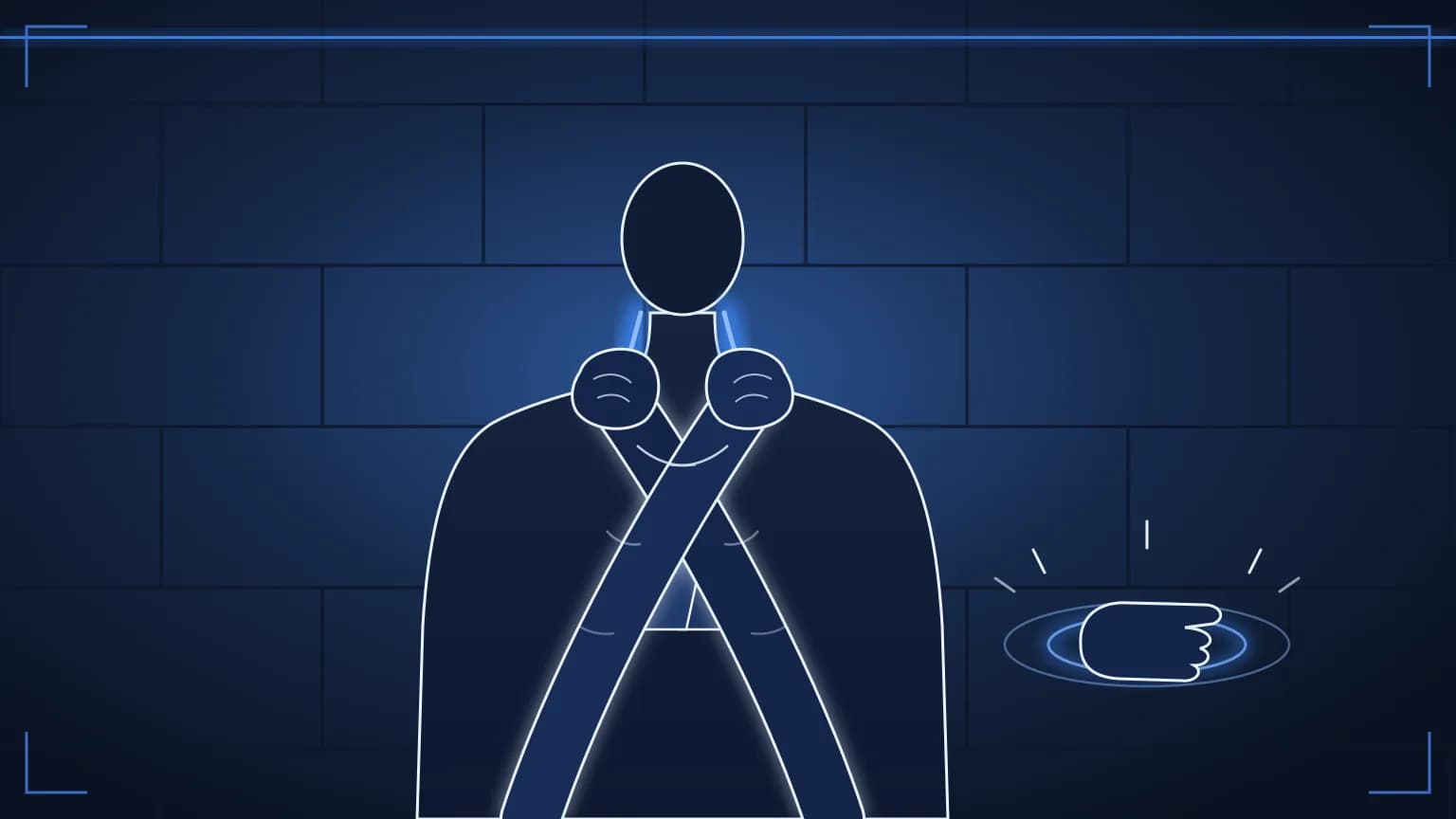
Judo has 12 official chokes, called shime-waza, in the Kodokan classification: 11 you can use in competition and one, do-jime, that both the Kodokan and the IJF prohibit. You win by ippon when your opponent taps twice, says "maitta," or loses consciousness, and in practice you release the instant your partner taps.
Most judo chokes squeeze the sides of the neck with the collar, a forearm or the legs. Learn them under a qualified coach, tap early, and never practise to unconsciousness.
See all 12 shime-waza at a glance
The IJF and Kodokan classification, updated on 1 April 2017, lists 32 grappling techniques: 10 pins, 12 strangles and 10 joint locks. Here are the 12 strangles, grouped the way you meet them on the mat.
| Name | English | Where you attack from | How it works | IJF status |
|---|---|---|---|---|
| Nami-juji-jime | Normal cross strangle | Front | Crossed hands, thumbs inside the collar, edges of the hands press both sides of the neck | Legal |
| Gyaku-juji-jime | Reverse cross strangle | Front | Crossed hands, fingers inside the lapels, palms up | Legal |
| Kata-juji-jime | Half cross strangle | Front | Crossed hands, one thumb in, one thumb out | Legal |
| Hadaka-jime | Naked strangle | Behind | Forearm across the front of the neck, hands clasped, no gi grip | Legal |
| Okuri-eri-jime | Sliding collar strangle | Behind | One hand deep in the far collar, the other pulls the opposite lapel down | Legal |
| Kataha-jime | Single wing strangle | Behind | One hand in the collar, the other arm lifts their arm and pushes behind the neck | Legal |
| Katate-jime | One-hand strangle | Side | One hand in the collar, edge of the arm presses the neck | Legal |
| Ryote-jime | Two-hand strangle | Front | Each hand grips the opposite-side collar, thumbs in, fists press both sides | Legal |
| Sode-guruma-jime | Sleeve wheel strangle | Front | Forearms in front and behind the neck, one hand holds your own sleeve, arms rotate | Legal |
| Tsukkomi-jime | Thrusting strangle | Front | One hand grips the lapel and thrusts its edge into the side of the neck | Legal |
| Sankaku-jime | Triangle strangle | Front, often from underneath | Legs lock in a triangle around the head and one arm | Legal |
| Do-jime | Trunk strangle | Any | Legs scissor the trunk | Prohibited |
The mechanics column paraphrases the Kodokan descriptions in that classification document. Read it alongside the site's judo techniques overview, which places shime-waza next to the throws, pins and joint locks.
Understand how a judo choke works
A well-applied judo choke works on blood flow. The collar or forearm presses the sides of the neck, where the carotid arteries and jugular veins run, and blood flow to the brain drops.
In a 1987 forensic review of choke hold deaths, Koiwai wrote that a properly applied shime-waza causes unconsciousness in 10 to 20 seconds and that no fatalities from shime-waza had been reported in the sport of judo since 1882. He reviewed 14 deaths linked to police choke holds outside sport.
The mechanism goes beyond squeezing one artery. A 2020 review of vascular neck restraint describes three contributors: carotid compression lowers pressure into the brain, jugular compression slows blood leaving it, and pressure on the carotid body can trigger a vagal response that lowers heart output.
That matters for your technique. For the collar chokes, aim the edges of your hands or fists at the sides of the neck: the Kodokan descriptions of nami-juji-jime and ryote-jime both press both sides. A shallow grip that only digs into the windpipe hurts your partner and stalls your attack.
Learn the chokes in four families
Use the cross strangles from the front
Nami-juji-jime, gyaku-juji-jime and kata-juji-jime all start with crossed hands deep in both collars. The difference sits in your palms: thumbs inside for nami, fingers inside for gyaku, one of each for kata. Get your first hand as deep as you can, near the back of the collar, before the second hand goes in. Then pull your elbows apart and down as you bring your chest close.
You meet these most often from your opponent's guard, from mount, or as they turn to their belly.
Attack from behind with hadaka-jime, okuri-eri-jime and kataha-jime
Once you get behind your opponent, for example when they turtle, the rear chokes take over. Okuri-eri-jime uses the collar: one hand feeds deep into the far collar, the other pulls the opposite lapel down. Kataha-jime adds a wing: your second arm lifts their arm and pushes behind their neck. Hadaka-jime uses no gi grip at all.
Keep your head tight to theirs and your chest glued to their back. Space lets them turn in.
Use the single-collar chokes as finishing tools
Katate-jime, ryote-jime, tsukkomi-jime and sode-guruma-jime need only one or two collar grips and often appear in scrambles or from the side. They work best when your opponent defends another attack and leaves the side of the neck exposed.
Lock the triangle with your legs
Sankaku-jime traps the head and one arm inside your legs. Judo players often reach it during turnovers of a turtled opponent. Keep the trapped arm inside the triangle: the IJF rules penalize leg chokes on the head without an arm in some positions (see below).
Know what the IJF rules allow
The IJF Sport and Organisation Rules (version of 14 August 2026) set the competition limits.
Win by ippon with a choke
The rules give ippon in ne-waza when your opponent taps twice or more with a hand or foot, says "maitta" ("I give up"), or loses consciousness from shime-waza, kansetsu-waza or osaekomi-waza.
Avoid the penalized choke actions
| Action | Penalty |
|---|---|
| Choking with your own or your opponent's belt, the bottom of the jacket, or only your fingers | Shido |
| Overstretching your opponent's leg while you choke | Mate and shido |
| Using your legs to assist a ryote-jime, hadaka-jime or sankaku-type grip around the head without one of your opponent's arms inside | Mate and shido |
| Applying shime-waza standing without a throw, or with a lower-risk throw where your opponent can escape | Shido |
| Applying shime-waza standing with a higher-risk throw where your opponent cannot escape | Hansoku-make |
| Applying do-jime | Hansoku-make, and you cannot continue in the tournament |
The rules also let a team or event doctor stop a match, especially for strangulation, if they see your health in danger. In cadet events, if you lose consciousness from a choke, you cannot continue in that competition. If you tap before you lose consciousness, you can keep competing.
Check the age limits
IJF official competitions start at the cadet level: nobody younger than 15 in the calendar year may compete in an IJF event. The IJF leaves rules for 9 to 14-year-olds to national federations. In the IJF veterans divisions, the M7 to M9 and F7 to F9 categories (ages 60 and up) compete without shime-waza.
National rules often go further. Under the British Judo amendments to the IJF contest rules (July 2026), no category exclusively for athletes under 16 allows shime-waza or kansetsu-waza, and applying one where the event bans it means hansoku-make, submission or not. Check your own federation's rules and your event's documents before every tournament. The site's judo rules guide and judo penalty checker cover the rest of the scoring and penalty system.
Read the safety research honestly
Judo chokes have a strong safety record when you tap and your partner releases. The research also shows where the risk sits.
Most chokes end in a tap, not unconsciousness
A video study of 7,426 bouts at the Judo World Championships from 2015 to 2021 found that shime-waza settled 307 bouts (4.1%): 6.0% of cadet bouts, 4.4% of junior bouts and 3.0% of senior bouts. Among those choke finishes, athletes lost consciousness in 18.9% of cadet, 14.6% of junior and 4.3% of senior cases.
The seconds after unconsciousness matter
The same study found convulsions or staggering after waking in 24 of 39 athletes (61.5%) who lost consciousness. When the choke stayed on for 4 seconds or more after the athlete went out, symptoms became far more likely (odds ratio 6.7). The fix sits with you as tori: release the instant your partner goes limp or taps.
Short-term and long-term findings look reassuring
- In a 1991 EEG study of 10 judoka choked to unconsciousness, the EEG slowed during the choke and then returned to normal, and the authors found no evidence of permanent brain function changes.
- In a survey of 4,307 grapplers, 0.05% (2 people) reported ongoing symptoms from chokes. The survey used a self-selected online sample, so read it as reassurance with limits.
- A study of 62 grapplers tested right after a choke or a non-choke submission found no difference in a rapid cognitive test.
- A pilot study of 20 grapplers with more than 500 choke events found no difference from controls in carotid wall thickness or blood markers of brain injury.
Rare injuries still happen
A 2022 case series described 10 grapplers with neck artery dissections or strokes linked to sport chokes. A 1991 case report linked memory problems in a judo player to frequent strangulation over his career. Rare events do not mean zero risk.
Get emergency care right away if you or your partner develops any of these after a choke: a severe or unusual headache, neck pain on one side, blurred or double vision, slurred speech, weakness or numbness on one side, or confusion that does not clear within a minute or two. Anyone who loses consciousness should stop training for the day and see a physician before returning.
Practise chokes safely
- Learn every choke from a qualified coach first. Drill grips and positions slowly before you add pressure.
- Tap early and tap twice. Tap on your partner's body or the mat, hard enough to hear. If your hands get trapped, tap with your foot or say "maitta."
- Release the instant your partner taps. Open your hands and pull your arms away, then check on your partner.
- Never choke anyone to unconsciousness in practice. No dare, no test, no "see how long you last."
- Choke with control in randori. Build pressure over a second or two so your partner can respond.
- Watch for a partner who goes quiet. If their hands stop moving or their body goes limp, release immediately and call your coach.
- Keep chokes out of practice for young children. Follow your federation's age rules in the dojo, too.
Build your ne-waza around chokes and pins together. A choke attempt often forces your opponent to open their elbows, which gives you the pin. The osaekomi-waza guide shows the 10 pins and how to hold each one.
When your partner straightens an arm to push your choke away, switch to juji-gatame with the judo armlocks guide, which covers all 10 kansetsu-waza and the IJF rules for each.
Get quick answers
How many chokes are there in judo?
The Kodokan classification lists 12 shime-waza. Eleven appear in competition; do-jime is prohibited.
Are chokes allowed in judo competitions?
Yes, for cadets (15 and older in the IJF system), juniors and seniors. National federations restrict or ban them for younger athletes, and the IJF bans them in veterans divisions for ages 60 and up.
How do you tap out in judo?
Tap your opponent or the mat twice or more with your hand or foot, or say "maitta." The IJF rules count either as a submission.
What happens if you choke someone unconscious in judo competition?
You win by ippon. In cadet events, the athlete who lost consciousness cannot continue in that competition.
Is hadaka-jime the same as a rear naked choke?
Both use a forearm across the front of the neck without gripping the gi. Judo's hadaka-jime describes the forearm across the throat with hands clasped. The judo vs BJJ guide compares how the two sports handle chokes and groundwork.
Are judo chokes dangerous?
When you tap and your partner releases, the research shows a strong safety record. Risk rises when a choke stays on after unconsciousness, and rare artery injuries do happen.
Check the sources
- IJF/Kodokan Classification of Judo (hosted by British Judo)
- International Judo Federation. Sport and Organisation Rules, version 14 August 2026
- British Judo. Amendments to IJF Contest Rules, July 2026
- Koiwai EK. Deaths allegedly caused by the use of "choke holds" (shime-waza). J Forensic Sci. 1987
- Stellpflug SJ and colleagues. There is more to the mechanism of unconsciousness from vascular neck restraint than simply carotid compression. Int J Neurosci. 2020
- Sasaki E and colleagues. High-rate settlement and unconsciousness with shime-waza in young judo athletes from a video analytic study in Judo World Championships. J Sci Med Sport. 2022
- Rodriguez G and colleagues. Judo and choking: EEG and regional cerebral blood flow findings. J Sports Med Phys Fitness. 1991
- Stellpflug SJ and colleagues. The safety of sportive chokes: a cross-sectional survey-based study. Phys Sportsmed. 2020
- Stellpflug SJ and colleagues. Cognitive assessment in grappling athletes following choke versus nonchoke submissions. Med Sci Sports Exerc. 2024
- Stellpflug SJ and colleagues. Impact of repeated sportive chokes on carotid intima media thickness and brain injury biomarkers in grappling athletes. Phys Sportsmed. 2025
- Stellpflug SJ and colleagues. Cervical artery dissections and ischemic strokes associated with vascular neck compression techniques. J Emerg Med. 2022
- Owens RG, Ghadiali EJ. Judo as a possible cause of anoxic brain damage: a case report. J Sports Med Phys Fitness. 1991
- Judo AI: Dojo Partner on the App Store